
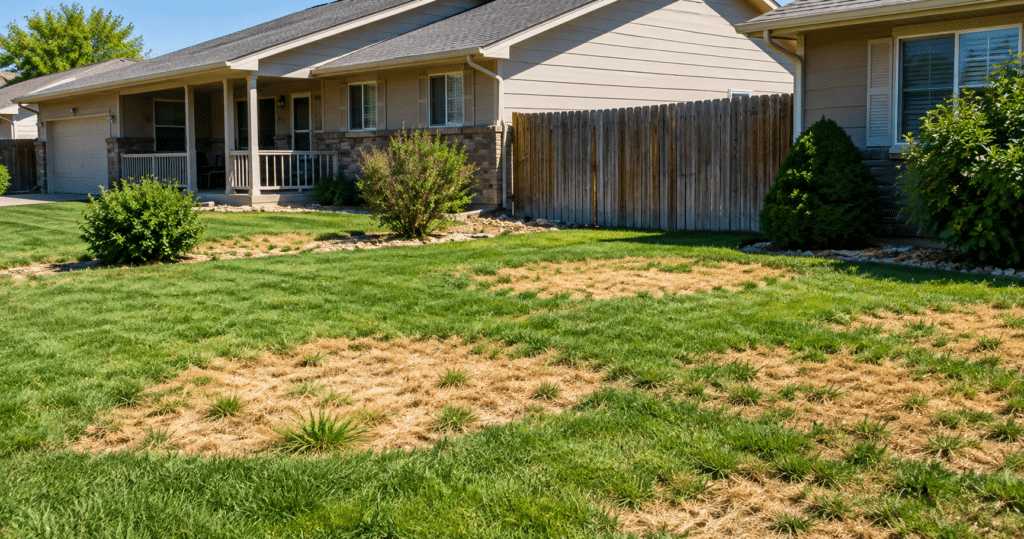
Brown patches, thinning grass, or turf that lifts easily from the soil can frustrate any homeowner. Drought, lawn disease, and irrigation problems can cause similar symptoms, but lawn grubs may be responsible for damage beneath the surface.
Effective grub control and prevention start with identifying the pest, understanding its life cycle, and applying the right treatment at the right time. For homeowners in Ogden and Northern Utah, early detection can limit root damage and protect lawn health.
At Green Castle Lawn Care and Pest Control, we help homeowners understand lawn problems and choose treatments suited to local growing conditions.
Call (801) 605-8307 to request a free, no-obligation estimate.
Understanding Grubs: What Are They and Why Are They a Problem?
Lawn grubs are the immature larvae of certain beetles. They typically have white or cream-colored, C-shaped bodies with brown heads and six legs near the front.
Some grub species feed on grass roots beneath the soil surface. As root damage increases, grass may struggle to absorb enough water and nutrients to remain healthy.
This can cause thinning grass, brown patches, and weakened turf, especially during Utah’s hot summer months.
However, not every brown patch indicates a grub infestation. Drought stress, lawn disease, and uneven irrigation can produce similar symptoms.
Identifying the actual cause is essential before applying treatment.
What Are the Signs of Grub Damage?
Grub damage can develop gradually, making it hard to spot until the lawn shows visible symptoms.
Common warning signs include:
- Brown or yellow patches: Grass may lose its healthy green color as grubs feed on roots.
- Loose turf: Severely damaged grass may lift easily because roots have been eaten.
- Thinning grass: Affected areas may become sparse or develop bare spots.
- Wildlife activity: Birds, skunks, or other animals may dig into the lawn while searching for insects.
- Weak roots: Grass may struggle to recover despite adequate watering.
One useful inspection method is to check the soil near the edge of a damaged patch.
Carefully lift a small section of turf and examine the root zone for C-shaped larvae and signs of root damage.
Finding a few grubs doesn’t automatically mean you need treatment. The number of larvae, species, lawn condition, and damage severity all influence the right response.
If you’re unsure whether grubs are causing your lawn problems, a professional inspection can help distinguish insect damage from other common turf issues.
The Grub Life Cycle: When Are They Most Active?
Understanding the grub life cycle helps you time treatment for maximum effectiveness.
Many turf-damaging beetles follow a seasonal development pattern:
1. Adult beetles emerge
Adult beetles become active during warmer months. Depending on the species, they may lay eggs in lawn soil during late spring or summer.
2. Eggs hatch into larvae
Young grubs begin feeding on grass roots after hatching. This is often an important period for preventive treatment because smaller larvae are generally more susceptible to certain products.
3. Grubs continue feeding
As larvae grow, they consume more roots. Damage may become noticeable during late summer or early fall, particularly when grass is already stressed by heat.
4. Grubs move deeper into the soil
As soil temperatures drop, many grub species move deeper underground to survive winter conditions.
5. Spring feeding resumes
Some larvae return closer to the root zone as soil temperatures rise. They may feed before developing into pupae and eventually adult beetles.
Timing varies by species and local weather conditions.
For Northern Utah homeowners, this means grub control should follow pest development rather than a fixed calendar date.
How Do You Get Rid of Grubs in Your Lawn?
Getting rid of lawn grubs requires identifying the infestation, evaluating the damage, and choosing a treatment that matches the grub’s development stage.
The first step is determining whether the grub population is actively feeding on roots.
A professional lawn assessment can help identify whether the problem requires immediate treatment, preventive protection, or recovery work.
Treatment options generally fall into two categories: curative and preventive grub control.
What Is the Fastest Way to Kill Lawn Grubs?
Curative grub treatments target existing infestations.
Certain insecticides can reduce grub populations when applied correctly, but homeowners should not expect every grub to die instantly.
Treatment effectiveness depends on several factors:
- The grub species and development stage
- The active ingredient used
- Soil moisture and temperature
- Proper application timing
- Product-specific watering instructions
Larger, mature grubs can be more difficult to control than younger larvae.
Remember that killing grubs does not immediately repair damaged grass.
Even after successful treatment, affected turf may require time, watering adjustments, and additional lawn care to recover.
Avoid applying multiple insecticides without confirming the problem. Using the wrong product or applying it at the wrong time can lead to disappointing results.
When Is the Best Time to Apply Grub Killer in Utah?
The best time to apply grub killer depends on whether you’re treating preventively or curatively.
Preventive grub control is generally timed before or around the period when young larvae are expected to become active.
For many common annual white grub species, preventive treatment windows fall during late spring or summer, depending on the product and local conditions.
Curative grub control targets grubs already feeding in the soil. Treatment decisions depend on the larvae’s size, activity, and the extent of damage.
In Northern Utah, late-summer lawn damage may indicate active feeding, but spring infestations can also occur.
Rather than relying on a single recommended month, homeowners should consider local conditions and the specific treatment they use.
Green Castle Lawn Care and Pest Control can help you discuss treatment timing based on your lawn’s symptoms and seasonal conditions.
Curative vs. Preventive Grub Control
Both approaches can help protect your lawn, but they serve different purposes.
| Treatment | Main Purpose | Best Situation |
|---|---|---|
| Preventive grub control | Targets susceptible young larvae before major damage | Lawns with a history of grub problems |
| Curative grub control | Controls an existing infestation | Confirmed active feeding and root damage |
| Monitoring | Identifies pest activity and treatment needs | Uncertain symptoms or low-risk lawns |
| Lawn recovery care | Supports damaged grass after feeding is addressed | Thin, stressed, or bare turf |
Preventive treatment may help lawns with documented recurring infestations.
Curative treatment may be more appropriate when grubs are already damaging roots.
Neither approach should replace proper pest identification.
How Can You Prevent Grubs in Your Lawn?
Preventing grub damage involves more than applying an insecticide.
Monitoring, timely treatment, and healthy lawn maintenance can help reduce the risk of serious damage.
Homeowners should pay particular attention to areas that experienced grub problems in previous seasons.
Healthy grass may tolerate some root feeding better than turf already weakened by drought, soil compaction, or poor growing conditions.
How Can You Prevent Grubs from Coming Back?
Grubs can return even after a previous treatment because adult beetles may lay new eggs in the lawn.
Long-term prevention begins with understanding your lawn’s infestation history.
Consider these practices:
Monitor previous trouble spots. Inspect areas where grub damage occurred during earlier seasons.
Maintain appropriate irrigation. Water according to your grass type, soil conditions, and local restrictions. Avoid unnecessary overwatering.
Support healthy root growth. Proper fertilization and seasonal maintenance can improve overall turf health.
Identify problems early. Investigate unusual brown patches before the damage spreads.
Review preventive treatment options. Lawns with repeated, confirmed infestations may benefit from a properly timed preventive application.
No lawn care method can promise that grubs will never return.
However, regular monitoring and informed treatment decisions can help homeowners respond before significant root damage develops.
How Does Integrated Pest Management Help Control Grubs?
Integrated Pest Management (IPM) combines monitoring, pest identification, lawn maintenance, and targeted treatments.
Instead of automatically applying insecticides, IPM focuses on understanding the problem before choosing a solution.
For grub control, this process generally includes:
- Inspecting the affected lawn and root zone.
- Identifying the pest and evaluating damage.
- Considering whether treatment is necessary.
- Selecting an appropriate control method.
- Monitoring the lawn after treatment.
This approach reduces unnecessary applications while focusing on areas where treatment may provide meaningful benefit.
For Northern Utah homeowners, IPM also encourages evaluating irrigation, soil conditions, and other sources of lawn stress.
Can an Annual Lawn Care Program Help with Grub Prevention?
An annual lawn care program can support stronger, healthier grass through properly timed seasonal treatments.
Services such as fertilization and weed control help address different factors that affect lawn appearance and growth.
However, fertilization alone does not prevent or eliminate grubs.
If your property has a history of grub infestations, ask whether your lawn care package includes grub control or recommends a separate treatment.
Green Castle Lawn Care and Pest Control offers lawn care services tailored to Northern Utah’s growing conditions.
Our team can help explain which services support overall turf health and which specifically address insect problems.
Can Your Lawn Recover from Grub Damage?
Yes, lawns can recover from grub damage when enough healthy roots and living grass remain.
The recovery process depends on how severely the grubs damaged the turf and whether you’ve controlled active feeding.
Lightly damaged grass may recover through improved growing conditions and appropriate maintenance.
Severely damaged areas may require additional restoration work, including overseeding.
The important distinction is that grub treatment addresses the pest, while lawn recovery focuses on rebuilding healthy turf.
How Long Does Lawn Recovery Take?
Recovery time varies with damage severity, grass species, soil conditions, and seasonal weather.
Grass with surviving roots may begin to improve under favorable growing conditions.
However, lawns with extensive root loss may need reseeding and more time to establish.
Several factors influence recovery:
- How much of the original root system remains
- Whether grubs are still actively feeding
- Soil moisture and irrigation coverage
- Available nutrients
- Grass type and growing season
For cool-season grasses commonly grown around Ogden, spring and early fall generally provide more favorable growth conditions than extreme summer heat.
Monitor whether damaged patches stop expanding before expecting visible improvement in color and density.
Can Fertilization Help Repair Grub-Damaged Grass?
Lawn fertilization can support recovery when surviving grass needs additional nutrients.
Proper nutrition helps grass grow healthily and maintain stronger root systems.
However, fertilizer does not kill grubs or replace roots that have already been destroyed.
Before fertilizing damaged turf, determine whether active feeding is continuing and whether watering or soil problems also need attention.
Over-fertilizing stressed grass can create additional problems.
Green Castle Lawn Care and Pest Control uses custom-blended lawn treatments designed for Utah growing conditions, including sulfur-based fertilizer options.
Our approach supports lawn health through appropriate seasonal care rather than treating every brown patch as a nutrient deficiency.
When Should You Aerate or Overseed a Damaged Lawn?
Aeration and overseeding may help restore certain lawns after you address grub damage.
Lawn aeration relieves soil compaction and improves air and water movement into the root zone.
Overseeding introduces new grass seed into thin or damaged areas.
Neither service directly controls grubs.
For cool-season lawns in Northern Utah, late summer through early fall is often a favorable time to establish grass seed because temperatures begin to cool while the soil remains relatively warm.
Before scheduling restoration work, consider the condition of the existing turf, irrigation availability, and any restrictions associated with recently applied lawn treatments.
A recovery plan should address the underlying cause of damage before investing in new grass growth.
Frequently Asked Questions About Grub Control
Professional grub control should begin with understanding your lawn's symptoms and infestation history.
The process may include inspecting damaged areas, assessing grub activity, recommending an appropriate treatment, and explaining watering or access instructions. You should also understand whether follow-up monitoring or separate lawn recovery work is recommended. At Green Castle Lawn Care and Pest Control, clear communication and locally informed treatment recommendations are central to our approach.Grub control frequency depends on the treatment product, infestation history, and seasonal pest activity.
Some preventive treatments follow a seasonal application window, while active infestations may require a different approach. More frequent applications are not automatically better. Always follow the product label and evaluate whether additional treatment is necessary.Grub control products have different safety precautions and reentry requirements.
Children and pets should stay off treated areas until the product label instructions are followed. Depending on the product, these instructions may require letting the application dry, watering the lawn, or following additional restrictions. Ask your lawn care provider about the product being applied and when your family can safely return to the treated area. Never assume that every grub treatment has the same reentry requirements.Protecting Your Lawn from Grubs
Successful grub control and prevention starts with identifying the pest, understanding when larvae are active, and selecting treatments that fit your lawn’s needs.
For Northern Utah homeowners, monitoring suspicious brown patches and maintaining healthy growing conditions can help reduce the risk of serious root damage.
Remember these essential steps:
- Confirm grub activity before applying treatment.
- Choose preventive or curative control based on the situation.
- Follow product-specific application and watering instructions.
- Support damaged grass through appropriate recovery care.
- Monitor previously affected areas for recurring problems.
Acting early can protect your lawn while avoiding unnecessary treatments.
Still Have Questions? Contact Green Castle Lawn Care and Pest Control
Are brown patches, thinning grass, or recurring grub problems affecting your lawn? Don’t let hidden pests cause further damage to your yard.
At Green Castle Lawn Care and Pest Control, we bring over 25 years of lawn care experience to homeowners in Ogden, Layton, Clearfield, Roy, North Ogden, and surrounding Northern Utah communities. Our team provides professional grub control and prevention solutions tailored to your lawn’s needs and local growing conditions.
Whether you’re dealing with an active infestation or planning preventive treatments, we’re here to help you take the next step toward a healthier lawn.
Ready to protect your lawn from grubs? Call (801) 605-8307 or request your FREE, no-obligation estimate today!
Stop grub damage before it spreads. Give your lawn the local care it deserves!
Related Reads for a Thriving Lawn
- Grub Control in Utah: Timing, Costs & Lawn Protection
- Lawn Fertilization FAQ: Common Questions Answered
- Northern Utah Grub Treatment & Prevention
- Grub Control and Prevention FAQ: Common Questions Answered - October 21, 2026
- Lawn Fertilization FAQ: Common Questions Answered - October 9, 2026