
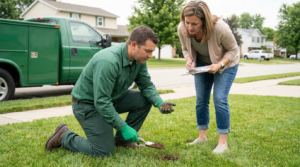
Brown patches, discolored spots, and thinning grass are clear signs of lawn disease, robbing your yard of its beauty and vitality. Ignoring these symptoms leads to widespread damage, costly repairs, and a perpetually unhealthy lawn. We understand the frustration of trying endless DIY solutions that deliver inconsistent results, especially in Northern Utah’s unique climate.
This guide cuts through the noise, comparing common lawn disease control options and alternatives. We reveal what truly works for Utah lawns, helping you reclaim a vibrant, healthy yard without the guesswork.
Quick Answer
Effective lawn disease control often requires a multi-pronged approach combining proper cultural practices with targeted treatments. Fungicides provide immediate relief for active diseases such as Dollar Spot or Brown Patch, while long-term health depends on custom fertilization, proper watering, and aeration. Professional diagnosis ensures the correct treatment, preventing further damage and wasted effort.
Table of Contents
Lawn Disease Control Options Compared
Not every lawn disease requires the same solution. The best treatment depends on the type of disease, severity of damage, lawn conditions, and long-term goals. Some options provide quick symptom relief, while others focus on preventing future outbreaks.
| Treatment Option | Best For | Effectiveness | Speed of Results | Long-Term Value |
|---|---|---|---|---|
| DIY Fungicides | Early-stage fungal diseases and minor outbreaks | Moderate | 1-3 weeks | Moderate |
| Professional Fungicide Applications | Active or widespread disease issues | High | Several days to 2 weeks | High |
| Fertilization & Nutrient Management | Diseases linked to nutrient deficiencies, including Dollar Spot and Red Thread | Moderate to High | Several weeks | High |
| Core Aeration & Soil Improvement | Compacted soils and recurring disease problems | Moderate | Gradual improvement | Very High |
| Watering & Cultural Practice Adjustments | Preventing future disease development | Moderate | Ongoing | Very High |
| Integrated Professional Lawn Care Programs | Chronic or recurring lawn disease issues | Highest | Ongoing improvement | Highest |
DIY Fungicides
Homeowner products such as Scotts DiseaseEx can help control certain fungal diseases when applied correctly and at the right stage of infection. While these products can be effective for minor outbreaks, success depends on accurate disease identification and proper timing of application.
Professional Fungicide Treatments
Professional lawn disease treatments provide targeted control using commercial-grade products and expert diagnosis. This approach helps eliminate guesswork and is often the most effective solution for severe diseases such as Necrotic Ring Spot, Brown Patch, and Summer Patch.
Fertilization and Nutrient Management
Some lawn diseases are closely tied to nutrient deficiencies or imbalances. A customized fertilization program strengthens turf, improves recovery, and helps lawns naturally resist future disease pressure.
Aeration and Soil Health Improvements
Compacted soil limits root growth and creates conditions that encourage disease development. Core aeration improves air circulation, water penetration, and nutrient uptake, helping create a healthier environment for turf growth.
Watering and Cultural Practice Adjustments
Improper irrigation is one of the most common contributors to lawn disease. Deep, infrequent watering and proper mowing practices reduce moisture-related stress and make lawns less susceptible to fungal outbreaks.
Integrated Lawn Care Programs
The most effective long-term strategy combines disease control, fertilization, aeration, weed management, and ongoing monitoring. Rather than treating symptoms alone, integrated programs address the underlying conditions that allow lawn diseases to develop.
Understanding Common Lawn Diseases in Utah

Lawn diseases manifest as distinct symptoms, ranging from small, sunken spots to large, discolored patches. These issues often stem from environmental stressors, such as improper watering, poor soil drainage, and fluctuating temperatures common in Northern Utah.
Accurate identification is the first step toward effective treatment. Misdiagnosing a disease leads to incorrect treatments, wasting time and money while the problem worsens. For instance, Necrotic Ring Spot, prevalent in Utah, needs a specific approach different from fungal issues.
Pro Tip: Many lawn diseases mimic nutrient deficiencies or insect damage. Observe patterns and colors carefully; irregular shapes and spreading, discolored rings often indicate fungal activity.
Identifying Specific Diseases
Each lawn disease has unique characteristics and preferred conditions. Knowing what to look for helps in prompt identification and targeted action.
-
- Dollar Spot: This disease appears as small, silver dollar-sized circular patches of sunken, straw-colored grass. It thrives in warm, high-humidity conditions, often indicating inadequate nitrogen fertilization or drought stress.
-
- Brown Patch: Large, irregularly shaped brown patches with a smoky gray border characterize this common fungal issue. Brown Patch favors hot, humid conditions and is often exacerbated by over-fertilization with nitrogen or excessive watering.
-
- Summer Patch: Appearing as circular or irregular patches of dying or dead grass, Summer Patch typically affects turf in summer’s heat. It creates distinct doughnut-shaped rings, often with greener grass in the center, and is associated with poor soil drainage and soil compaction.
-
- Red Thread: This disease is identified by pink or reddish threads among the grass blades, giving the lawn a reddish cast. It occurs in cool, wet weather and low nitrogen conditions, often seen in spring and fall.
-
- Grass Rust: If your shoes turn orange after walking on your lawn, you likely have grass rust. It manifests as yellow flecks that turn into orange-brown pustules on grass blades, thriving in mildly warm temperatures and prolonged dampness, usually from late summer to fall.
-
- Necrotic Ring Spot: This aggressive fungus creates circular patches of dead turf, often with a “frog-eye” appearance where healthy grass grows in the center. It’s particularly common in Kentucky Bluegrass in Utah and can cause severe damage if left untreated. Get Rid of Necrotic Ring Spot in Utah Lawns Fast with our targeted treatments.
Choosing Between DIY and Professional Lawn Disease Treatment
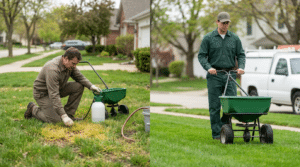
Once you’ve identified your treatment options, the next decision is whether to handle the problem yourself or work with a professional lawn care company. While some minor fungal issues can be managed with homeowner products, severe or recurring lawn diseases often require expert diagnosis and specialized treatments.
Professional lawn care offers complete solutions, rooted in expertise and tailored to your lawn’s unique needs. We assess the exact disease, soil conditions, and environmental factors to apply the most effective treatments. This approach saves you time and money, securing your investment in a healthy lawn.
Why Professional Service Outperforms DIY
Our 25 years of experience in Northern Utah’s climate means we understand exactly what your lawn needs. Professionals bring diagnostic accuracy, specialized products, and precise application methods that DIY efforts simply cannot match.
| DIY Treatment | Professional Treatment | |
|---|---|---|
| Diagnosis Accuracy | Often based on guesswork or generic online advice. | Expert identification of specific disease and underlying causes. |
| Treatment Effectiveness | Broad-spectrum products may not target specific diseases, leading to inconsistent results. | Targeted, custom-blended treatments with specialized fungicides for proven results. |
| Product Access | Limited to retail fungicides, often less potent or precise. | Access to professional-grade products and application equipment. |
| Long-Term Prevention | Focus on immediate symptoms, rarely addressing root causes. | Integrated approaches including soil health, proper nutrition, and cultural practices. |
| Time & Effort | Significant time commitment and physical labor. | Hands-off solution, saving homeowner time and effort. |
| Cost Efficiency | Repeated purchases of ineffective products, potential for greater damage. | Efficient use of resources, preventing costly long-term damage and re-treatment. |
When to Apply Fungicide: Timing is Everything
The best timing for fungicide application depends entirely on the specific disease, its life cycle, and prevailing weather conditions. Applying too early or too late renders treatments ineffective, wasting product and allowing diseases to spread.
Generally, preventative applications are made when environmental conditions favor disease development but before symptoms become severe. Curative treatments are applied once disease symptoms are visible, aiming to halt further spread and promote recovery. Our experts monitor local weather and turf conditions to time applications perfectly.
What month should I apply fungicide to my lawn?
Fungicide application months vary based on the target disease and local climate, but typically fall within spring, summer, and fall. For cool-season grasses common in Utah, spring and fall applications often target diseases active in cooler, wetter conditions.
Summer sees applications focused on heat- and humidity-loving diseases. Preventive applications for diseases such as Necrotic Ring Spot or Summer Patch often begin in late spring or early summer, before temperatures consistently rise. Consult with our team for precise seasonal guidance specific to your lawn’s needs.
-
- Spring: Preventative for cool-season diseases (e.g., Red Thread) and early-season attacks by summer diseases.
-
- Early to Mid-Summer: Critical for preventing warm-season diseases like Brown Patch, Dollar Spot, and Summer Patch before peak heat and humidity.
-
- Late Summer to Fall: Targeting perennial issues like Necrotic Ring Spot and various rusts that can emerge as temperatures cool.
The 150 Rule for Lawn Fungus Explained
The 150 rule is a guideline primarily used to time preventive fungicide applications against certain warm-season turf diseases, such as Brown Patch. It suggests applying fungicide when the sum of the daily high and overnight low temperatures consistently exceeds 150 degrees Fahrenheit. This temperature range indicates conditions highly favorable for fungal growth.
While a helpful heuristic, the 150 rule should not be the sole determinant for application. Soil moisture, humidity levels, and specific grass type also play critical roles in disease development. Our experience shows that while the 150 rule signals prime conditions, a full understanding of your lawn’s environment is superior for best timing.
Pro Tip: Northern Utah’s rapid temperature swings mean relying solely on a simple temperature rule can be misleading. A professional diagnosis considers humidity, soil conditions, and grass species to determine precise timing.
Best Lawn Disease Control Products and Treatment Options
The “best” product for lawn disease control isn’t a single solution; it’s a targeted fungicide or treatment plan tailored to the specific disease present. Effective products contain active ingredients designed to disrupt fungal growth, such as propiconazole, azoxystrobin, or myclobutanil.
Choosing the right product requires accurate disease identification, where professional expertise is invaluable. We use custom-blended treatments, ensuring your lawn receives exactly what it needs to recover and thrive. Our products are professional-grade, offering superior effectiveness compared to retail alternatives.
When should I apply Scotts DiseaseEx Lawn Fungicide?
Scotts DiseaseEx Lawn Fungicide, containing pyraclostrobin and triticonazole, is designed for broad-spectrum disease control and is generally applied preventatively or at the first sign of disease. For ideal results, apply it when conditions favor disease development, typically in late spring or early summer, and continue applications every 2-4 weeks as directed on the label.
While Scotts DiseaseEx can be a decent option for homeowners facing common diseases like Dollar Spot or Brown Patch, it lacks the precision and potency of professional-grade products. Its effectiveness also depends heavily on proper application techniques and accurate disease identification, which many DIYers struggle with. For persistent or severe diseases, professional intervention with custom-blended fungicides provides a more reliable and lasting solution.
Should You Fertilize a Lawn with Fungus?
Fertilizing a lawn to treat a fungal disease requires careful consideration and depends on the specific disease and the existing nutrient levels. In many cases, applying too much nitrogen can exacerbate fungal diseases like Brown Patch, causing them to spread more rapidly.
However, some diseases, like Red Thread or Dollar Spot, are often linked to nitrogen deficiency, and a light, balanced fertilizer application can aid recovery. The key is balance and specificity. Our professional lawn care services include soil testing to determine exact nutrient needs, ensuring fertilization aids recovery rather than worsening the problem.
We analyze your lawn’s condition and apply custom-blended treatments that support recovery. This often means using slow-release fertilizers or adjusting nutrient ratios. Our approach focuses on long-term management strategies, not just immediate fixes, promoting overall lawn health.
Long-Term Strategies for Disease Prevention and Health
Preventing lawn diseases is far more effective and less costly than treating them. A reliable, healthy lawn naturally resists many common fungal issues. Our approach focuses on building this resilience through consistent, expert care tailored to Northern Utah’s climate and soil conditions.
This includes proper watering techniques, balanced fertilization, routine aeration, and managing thatch. Investing in these practices leads to a vibrant, resilient lawn that maintains its beauty year-round.
Key Preventative Measures
-
- Proper Watering: Water deeply and infrequently, preferably in the early morning. This encourages deep root growth and allows grass blades to dry before nightfall, reducing humidity that encourages fungal growth.
-
- Balanced Fertilization: Apply the right nutrients at the right time. Over-fertilization, especially with nitrogen, can trigger diseases. Under-fertilization weakens the lawn, making it susceptible. Our custom-blended treatments ensure the best nutrient balance.
-
- Aeration: Regular aeration relieves soil compaction, improving air circulation, water penetration, and nutrient uptake. This strengthens roots and reduces stress on the turf. Learn more about Professional Lawn Aeration & Soil Renewal in Ogden, UT.
-
- Thatch Management: Excess thatch creates a breeding ground for fungi. Dethatching, when necessary, removes this layer, improving air and water movement in the soil.
-
- Mowing Height: Maintain an appropriate mowing height, generally 2.5-3 inches for cool-season grasses. Taller grass shades the soil, reducing weed germination and reducing stress on the lawn.
Authoritative Insights from Local Experts
With 25 years of experience serving Weber County and the surrounding Northern Utah area, we have unparalleled local expertise. Our team understands the specific challenges our climate poses, from intense summer heat to freezing winters, and how these impact lawn health and disease susceptibility.
We combine this regional knowledge with continuous training in the latest turf science and pest management techniques. Our certifications and track record demonstrate our commitment to delivering superior results. This deep expertise ensures your lawn receives the most effective and sustainable care possible.
Pro Tip: Many “universal” lawn care tips don’t apply to Utah’s unique dry climate and alkaline soils. Always choose a provider with proven local experience.
Partner With Northern Utah’s Trusted Experts
Choosing Green Castle Lawn Care means partnering with a team dedicated to your lawn’s long-term health and beauty. We don’t offer generic, one-size-fits-all solutions. Instead, we develop custom-blended treatment plans that address your specific lawn diseases and preventative needs.
Our thorough solutions extend beyond disease control, encompassing everything from Expert Crabgrass & Weed Control Solutions in Utah to Effective Insect Control & Lawn Pest Control Solutions in Ogden, UT. We streamline your outdoor property maintenance, providing reliable service and peace of mind.
We offer flexible lawn care packages designed for Utah lawns, bundling services for better value and consistent results. You’ll receive a free estimate and the flexibility to select a package that fits your lawn, your schedule, and your budget without long-term contracts. Save 10% when you sign up for a full-season lawn care package. This simple approach locks in consistent care and better value throughout the year.
Frequently Asked Questions
The Bottom Line
Effective lawn disease control moves beyond guesswork, requiring accurate diagnosis, targeted treatments, and a proactive approach to soil health and environmental factors. DIY solutions often fall short, leading to frustration and continued damage. Green Castle Lawn Care brings 25 years of local expertise, custom-blended solutions, and a commitment to long-term lawn health. This ensures your Northern Utah lawn remains vibrant, resilient, and disease-free.
Revitalize Your Lawn Today
Don’t let lawn diseases ruin your yard’s beauty and health. Our expert team is ready to diagnose and protect your lawn with proven, customized solutions. Imagine a vibrant, green lawn that improves your property’s curb appeal and provides a perfect outdoor space for your family.
Take the first step towards a healthier, more beautiful lawn. Contact us today for a free estimate and discover the difference professional care makes. Our team serves Marriott-Slaterville, Riverdale, Uintah, Hooper, Farr West, Plain City, Pleasant View, West Haven, and surrounding Northern Utah communities.
Related Reads

- Is your lawn looking patchy or brown? You’re not alone! - September 1, 2026
- Lawn Fertilization Comparison: Options & Alternatives - July 23, 2026
- Lawn Disease Control – Options & Alternatives - July 7, 2026