
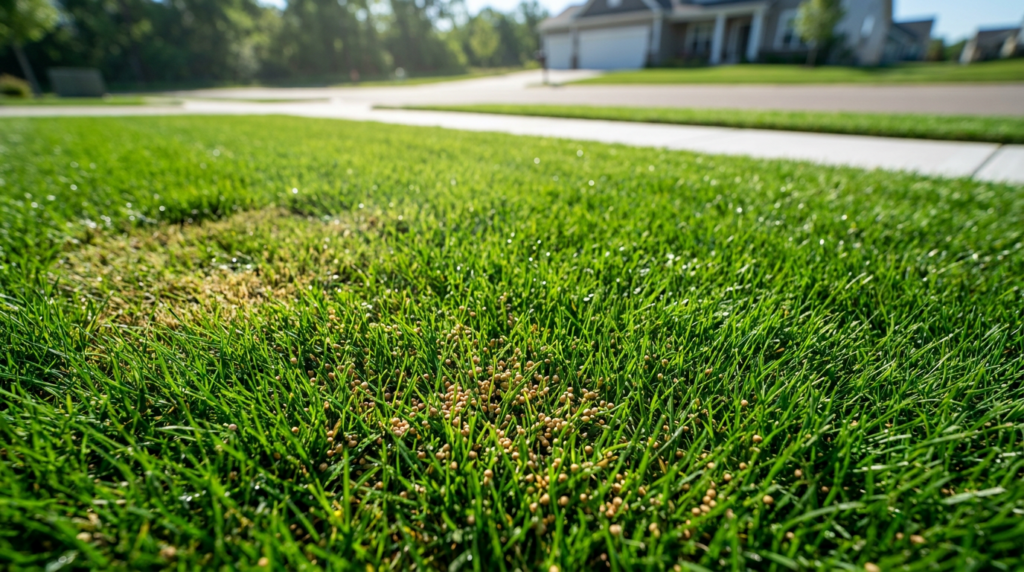
Achieving a healthy, vibrant lawn involves understanding various fertilization methods. Homeowners often struggle with brown patches, persistent weeds, and general lawn health, leading to frustration and wasted effort on ineffective DIY solutions. Green Castle Lawn Care has 25 years of experience addressing these very issues, guiding our clients to the right choices for their specific needs.
Understanding Lawn Fertilization: The Basics
What’s Lawn Fertilization?
Lawn fertilization involves applying nutrients to the soil to improve turf grass growth and density. Grass needs essential elements like nitrogen, phosphorus, and potassium, which are often depleted from the soil over time. Proper fertilization replenishes these nutrients, promoting stronger roots and healthier blades.
Fertilization supports several key aspects of lawn health:
- Improved growth and density
- Improved green color
- Increased disease and pest resistance
- Stronger root development
- Better drought tolerance
Why Fertilize Your Lawn?
Fertilizing your lawn strengthens it against environmental stressors, ensuring it remains solid and visually appealing. A well-nourished lawn can better withstand drought, foot traffic, and common lawn diseases. Without proper nutrients, grass becomes thin, weak, and susceptible to weeds and pests. Our lawn fertilization services are designed to give your lawn the ideal blend of nutrients.
A healthy lawn offers distinct benefits:
- Increased curb appeal and property value.
- Reduced weed and pest problems.
- Better resistance to hot Utah summers.
- More resilience against foot traffic.
- A safer, more enjoyable outdoor space for families and pets.
Our complete Annual Lawn Care Program ensures your lawn receives consistent nutrition to thrive all year. Get a Free Lawn Care Estimate tailored to your property.
Traditional Lawn Fertilization: Pros & Cons
How Chemical Fertilizers Work
Chemical fertilizers, also known as synthetic or inorganic fertilizers, provide readily available nutrients to plants through man-made compounds. These fertilizers are engineered to deliver precise amounts of nitrogen (N), phosphorus (P), and potassium (K) directly to the grass. They act quickly, promoting rapid greening and growth.
These fertilizers contain:
- Nitrogen: For lush, green leaf growth.
- Phosphorus: For strong root development.
- Potassium: For overall plant health and resistance.
Benefits of Synthetic Fertilizers
Synthetic fertilizers deliver visible results quickly, making them popular for homeowners seeking immediate improvements. They’re formulated to exact specifications, ensuring precise nutrient delivery for predictable growth and color enhancements. Their rapid action helps lawns recover quickly from stress or dormancy.
Specific advantages include:
- Fast-acting green-up.
- Precise control over nutrient ratios.
- Often more cost-effective upfront than organic alternatives.
- Easy to apply with standard spreaders.
While quick results are appealing, it’s essential to consider the implications before choosing synthetic-only options. Our team can discuss the best approach for your custom-blended treatments, call us today.
Drawbacks and Environmental Impact
Despite their immediate benefits, chemical fertilizers have significant drawbacks, particularly regarding environmental health and long-term soil vitality. Over-application can lead to nutrient runoff, contaminating local waterways such as the Weber River, harming aquatic life, and contributing to excessive algal growth. These fertilizers provide no benefit to essential soil microorganisms and can degrade soil structure over time. Environmental conscious property owners often express concerns about harsh chemicals impacting family, pets, and the local ecosystem.
Key concerns include:
- Risk of nutrient runoff and water pollution.
- Potential harm to beneficial soil microbes.
- Can burn grass if applied incorrectly.
- Doesn’t improve soil structure or organic matter.
- Concerns for pet and human safety after application.
We approach fertilization with a balanced view, considering both effectiveness and environmental responsibility. We customize our solutions to minimize negative impacts while maximizing lawn health. Explore our Lawn Fertilization In Weber County services to see our local approach.
Organic Lawn Fertilization: A Natural Approach
Types of Organic Fertilizers
Organic fertilizers use naturally occurring materials to enrich soil, improving its structure and providing a slow-release source of nutrients. These materials come from plant, animal, or mineral sources. They stimulate beneficial microbial activity in the soil, which in turn makes nutrients available to grass roots over time.
Common organic fertilizer sources include:
- Compost: Decomposed organic matter rich in diverse nutrients.
- Manure: Animal waste, often composted, providing nitrogen and other elements.
- Bone meal: A source of phosphorus and calcium.
- Blood meal: A fast-acting nitrogen source.
- Alfalfa meal: Provides nitrogen and promotes microbial growth.
Advantages of Organic Options
Organic fertilization fosters a healthier soil ecosystem, leading to resilient turf that thrives naturally. Instead of just feeding the grass, organic inputs feed the soil, building rich organic matter that retains water and nutrients more effectively. This approach contributes to a truly healthy, rather than superficially green, lawn for eco-conscious gardeners. We have found these methods to be ideal for supporting a lush lawn in Utah’s unique climate.
Benefits of choosing organic solutions:
- Improved long-term soil health and structure.
- Reduced risk of nutrient runoff and water pollution.
- Safer for children and local wildlife, including pollinators.
- Sustainable nutrient release, reducing frequent application needs.
- Improved resistance to drought and disease.
Our custom-blended treatments prioritize both effective growth and environmental stewardship. Ask us about integrating organic solutions into your lawn care plan when you request a Free Lawn Care Estimate.
Considerations for Organic Care
Organic lawn care demands patience and a commitment to nurturing the soil over time, as results typically appear slower than with synthetic products. Organic fertilizers rely on microbial activity to break down nutrients, meaning their effectiveness can fluctuate with soil temperature and moisture. This method is an investment in long-term soil health and sustainability rather than instant gratification.
Factors to consider:
- Slower initial results compared to chemical fertilizers.
- Application rates may be higher due to lower nutrient concentration.
- Cost can be higher than synthetic options.
- Requires a deeper understanding of soil biology.
- Effectiveness is influenced by environmental conditions.
While organic care requires more patience, the long-term benefits for your lawn and the environment are significant. Our 25 years of local expertise allow us to tailor organic strategies that work effectively for Utah’s regional soil types.
Do-It-Yourself (DIY) Lawn Fertilization
Tools and Knowledge Required
Successful DIY lawn fertilization demands specific tools, precise calculations, and an understanding of lawn care principles. Homeowners need to invest in quality spreaders, safety gear, and often a soil test kit to determine their lawn’s actual nutrient needs. Without accurate soil analysis and proper equipment, DIY efforts can lead to over or under-fertilization.
Essential elements for DIY success:
- Spreader: Broadcast or drop spreader for even application.
- Soil test kit: Critical for identifying nutrient deficiencies.
- Accurate measurements: Knowing your lawn’s square footage.
- Fertilizer type knowledge: Understanding NPK ratios and release types.
- Safety gear: Gloves, masks, and eye protection.
When DIY Makes Sense
DIY lawn fertilization works best for homeowners who possess a strong interest in detailed lawn care, have ample time, and are committed to continuous learning. It can be a rewarding hobby for individuals who enjoy careful garden work and are prepared to monitor their lawn’s response to treatments closely. This approach suits those seeking to improve their budget, assuming they correctly execute each step.
DIY might be for you if you:
- Enjoy spending time on yard work.
- Have a small, manageable lawn.
- Are highly detail-oriented and patient.
- Are willing to research and learn about soil science.
- Prefer a hands-on approach to home maintenance.
Potential Risks and Challenges
DIY fertilization carries several risks, including incorrect product selection or application, which can damage your lawn. Over-fertilization can lead to fertilizer burn, creating yellow or brown patches, while under-application yields little to no improvement. Busy homeowners often lack the time for consistent DIY maintenance, leading to frustration and wasted money on ineffective solutions. Poor application techniques can also contribute to nutrient runoff, impacting local waterways.
Common DIY pitfalls:
- Fertilizer burn: Caused by too much product or uneven spreading.
- Nutrient imbalance: Applying the wrong NPK ratio for your soil.
- Weed and pest problems: Incorrect fertilization can weaken grass, making it vulnerable.
- Environmental impact: Runoff from improper application.
- Time consumption: Research, purchase, and application take significant time.
For consistent, healthy results without the DIY guesswork, consider our professional Lawn Care Services. We offer tailored solutions ensuring your lawn thrives, addressing common issues like the necrotic ring spot and dollar spot lawn diseases that are prevalent in Utah.
Exploring Alternatives to Traditional Fertilization
Compost and Soil Amendments
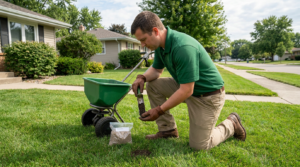
Integrating compost and other soil amendments significantly enhances soil health and nutrient availability without relying on synthetic fertilizers. Compost enriches the soil with organic matter, improving its structure, water retention, and microbial activity. These amendments act as slow-release nutrient sources, fostering a stronger foundation for grass growth.
Benefits of soil amendments:
- Increases beneficial microbial populations.
- Improves soil structure and aeration.
- Boosts water and nutrient retention.
- Reduces the need for synthetic inputs.
- Helps neutralize soil pH imbalances.
Our custom-blended treatments consider your soil’s specific needs, often incorporating these natural approaches to build lasting lawn health. This aligns with the goals of eco-conscious gardeners seeking environmentally friendlier methods.
Overseeding and Aeration
Overseeding and aeration are essential practices that promote dense, healthy turf, naturally reducing weed competition and boosting fertilizer effectiveness. Aeration relieves soil compaction, allowing air and nutrients to penetrate deeper to the roots. Overseeding introduces new grass varieties, improving disease resistance and filling in thin areas. Our Lawn Aeration Services are specifically designed for ideal results in Utah’s compacted soils.
Key advantages:
- Aeration improves nutrient uptake and root growth.
- Overseeding increases overall lawn density, outcompeting weeds.
- Improves grass resilience against drought and disease.
- Contributes to a thicker, more uniform lawn appearance.
- Reduces the need for excessive fertilization.
For a strong, self-sustaining lawn, consider combining aeration and Lawn Seeding with your fertilization strategy. We can help you determine the best timing for these services for your local climate.
Lawn Fertilization Options: A Side-by-Side Comparison
Understanding the distinctions between fertilization methods helps homeowners make informed decisions for their lawn’s health and the environment.
| Feature | Traditional (Chemical) | Organic | DIY | Alternatives (Compost, Aeration) |
|---|---|---|---|---|
| Speed of Results | Fast (days to weeks) | Slow (weeks to months) | Variable, depends on skill | Slow (seasonal to yearly) |
| Nutrient Release | Immediate, synthetic | Slow, natural decomposition | Variable, depends on product | Gradual, soil enrichment |
| Environmental Impact | Higher risk of runoff, soil degradation | Low risk, improves soil ecosystem | Variable, depends on correctness | Very low, highly beneficial |
| Cost (Annual) | Moderate to high | Higher initially, less long-term | Low to moderate (plus tools, time) | Low (if DIY compost), moderate (pro service) |
| Soil Health Impact | Minimal long-term benefit for soil biology | Significant long-term improvement | Minimal long-term benefit, potential harm | Major long-term improvement |
| Safety (Pets/Kids) | Requires restricted access after application | Generally safe immediately after application | Variable, depends on product | Very safe |
| Expertise Required | Low (if following instructions) | Moderate (understanding soil, products) | High (diagnosis, application, timing) | Moderate (understanding soil, timing) |
Choosing the Best Fertilization Method for Your Lawn
Best for Quick Results
Traditional chemical fertilizers offer the fastest path to a visibly greener and more vigorous lawn, making them suitable for situations requiring rapid aesthetic improvement. Their quick-acting compounds deliver immediate nutrients directly to the grass. We utilize custom-blended treatments that balance efficiency with effectiveness, ensuring quick results without compromising long-term health as much as generic products.
Consider traditional methods if:
- You need rapid recovery for a stressed or neglected lawn.
- You prioritize immediate greening and strong growth.
- You have specific nutrient deficiencies that require precise, fast-acting solutions.
- You’re preparing for an event where lawn appearance is critical.
Best for Environmental Consciousness
Organic fertilization stands out as the best option for homeowners prioritizing environmental health and safety. Organic methods support a thriving soil ecosystem, protect local waterways, and minimize exposure to synthetic chemicals for children and pets. Eco-conscious homeowners and gardeners want effective solutions without damaging the local ecosystem.
Organic options are ideal if:
- You want to improve soil health over the long term.
- You have children or pets frequently using the lawn.
- You’re concerned about chemical runoff into local water sources.
- You aim to support beneficial soil organisms and pollinators.
- You value sustainable practices in your home maintenance.
Best for Budget-Minded Homeowners
DIY fertilization can appear cost-effective initially, but the true cost includes time, effort, and the risk of error. Many homeowners waste time and money on ineffective DIY products. Professional services often provide better value by preventing costly mistakes and ensuring long-term lawn health. Green Castle Lawn Care offers Flexible Lawn Care Packages and a Free, No-Obligation Estimate, allowing you to find a custom-blended solution that fits your budget without the DIY risks.
Consider professional services for budget efficiency when you factor in:
- The cost of repeat DIY purchases due to incorrect application.
- The value of your time spent on research and labor.
- The potential expense of correcting DIY mistakes, like fertilizer burn or disease.
- The savings from proactive prevention of issues like grub infestations.
Save 10% when you sign up for our Annual Lawn Care Program, a simple way to lock in consistent care and better value throughout the year.
Considering Your Local Climate and Soil
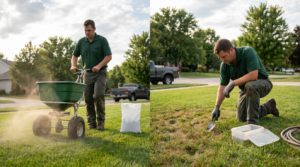
Your local climate and soil conditions in Utah are essential in selecting the most effective fertilization strategy. Utah’s unique environment, with its alkaline soils and varying temperatures, demands a tailored approach that generic, one-size-fits-all treatments often miss. For 25 years, Green Castle Lawn Care has specialized in understanding these specific challenges.
Factors we consider:
- Soil pH: Utah soils are typically alkaline, influencing nutrient availability.
- Grass types: Cool-season grasses, such as fescue, are common and have specific needs.
- Seasonal changes: Fertilization timing adjusts dramatically between spring, summer, and fall.
- Water availability: Drought conditions influence nutrient absorption and grass stress.
- Prevalent pests and diseases: Such as grubs or necrotic ring spot, which require a strong lawn.
Our custom-blended treatments are specifically formulated to meet the distinct nutritional needs of Utah soils, ensuring optimal health and vibrant growth for local lawns.
Frequently Asked Questions About Lawn Fertilization
Professional Lawn Fertilization Services from Greencastle Lawn Care
Choosing the right fertilization strategy is more than just applying nutrients; it’s about understanding your property’s unique soil chemistry and the seasonal demands of Utah’s climate. Whether you prefer the rapid response of synthetic blends or the long-term soil-building benefits of organic materials, a consistent, professionally managed program is the most reliable way to ensure a lush, resilient landscape.
At Green Castle Lawn Care, we bring 25 years of local expertise to every yard we treat. We take the guesswork out of lawn health by providing customized nutrient blends tailored to Utah’s hot summers and specific soil conditions, giving you a beautiful lawn that withstands foot traffic and drought alike.
Ready to transform your lawn into the envy of the neighborhood? Don’t settle for brown patches and persistent weeds. Contact our team today for a Free Lawn Care Estimate and let us design a fertilization plan that works for you. Let’s grow something great together.

- Lawn Fertilization Comparison: Options & Alternatives - July 23, 2026
- Lawn Disease Control Comparison: Options & Alternatives - July 7, 2026
- Grub Control & Prevention FAQ: Your Lawn Questions Answered - May 14, 2026